
 Short
What in the Hog?!
Florida Shipped It to Georgia | What the Hog
Published Nov 2, 2026
THE MATCHUP LAB · College football · FBS
Scores, statistics and the story behind the game.
Checking for updates…
THE MATCHUP LAB COVERAGE
8–27 final | 2026 regular season | Evidence cutoff 2026-11-01T11:35:11Z
Georgia beat Florida 27–8 with a performance that was more convincing on defense and on the ground than through the air. The Bulldogs ran for 217 yards but passed for only 101. Florida gained 246 total yards and surrendered four takeaways, while Georgia committed one turnover. Those extra possessions helped make a modest offensive total sufficient.
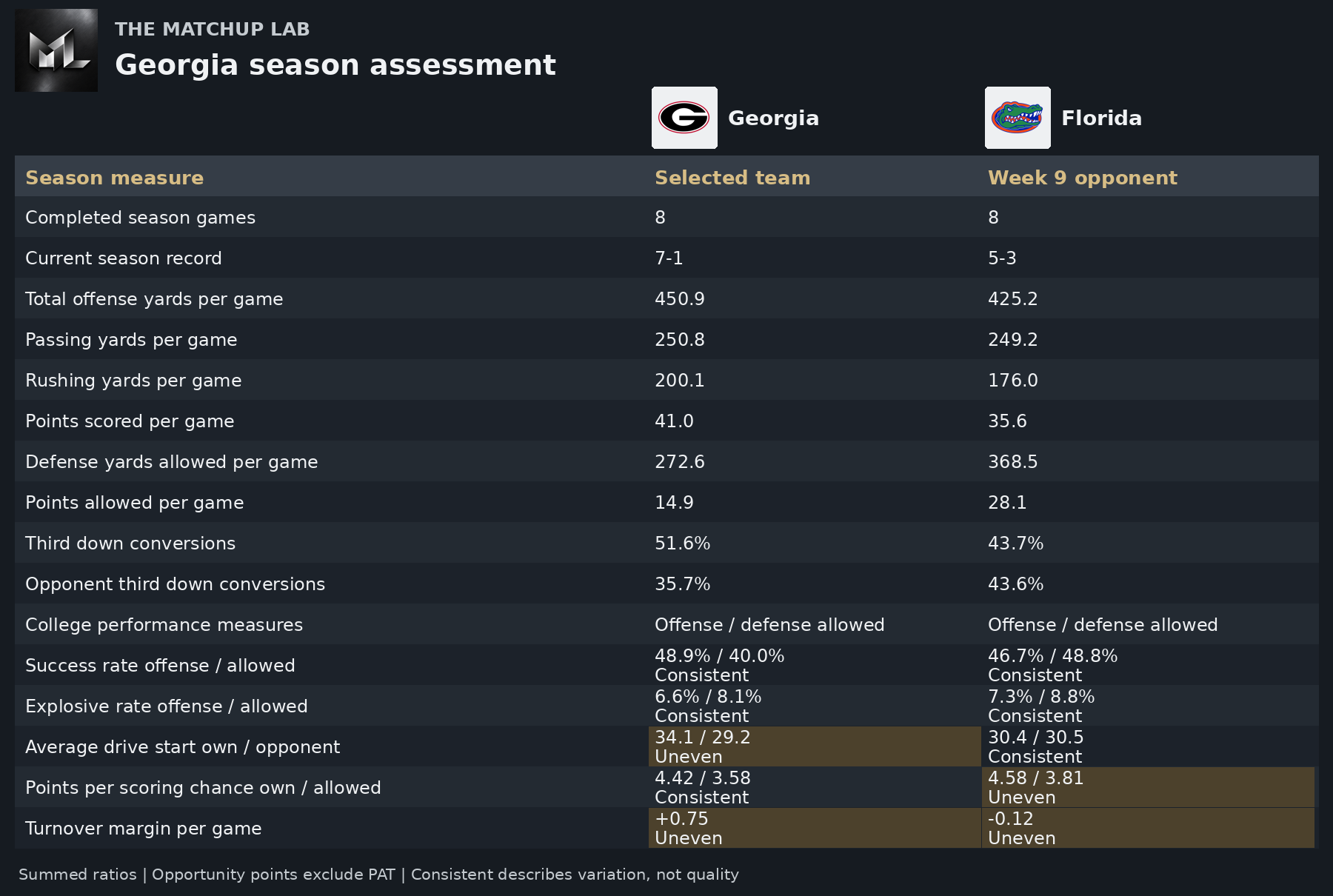
The season is broader than that passing line. Georgia average 450.9 yards and 41.0 points, with roughly 200 rushing yards per game and a substantial passing contribution. Their third-down conversion rate exceeds 51 percent. They have usually been able to maintain progress without asking every possession to end in a long pass.
There is a defensive warning inside the otherwise strong record. Georgia allow a higher explosive-play rate than they produce. Their low yardage and scoring allowances show that this has not overwhelmed them, but it remains a route by which a more productive opponent could avoid long drives. The latest four-takeaway game should not be used to erase that risk. Their season turnover margin is positive, and its weekly variation is material.
Ole Miss are next. The Rebels just sustained an exceptional number of third-down possessions against Auburn, so Georgia cannot assume the same short offensive workload Florida provided. The Bulldogs need to limit easy early-down progress, then make their own passing game a credible complement to the run. Seventh win secured, the useful question is how comfortably this offense can function when the defense supplies fewer gifts.
2026-10-31T19:30:00.000Z | 2026 regular season | Evidence cutoff 2026-10-30T10:20:00Z
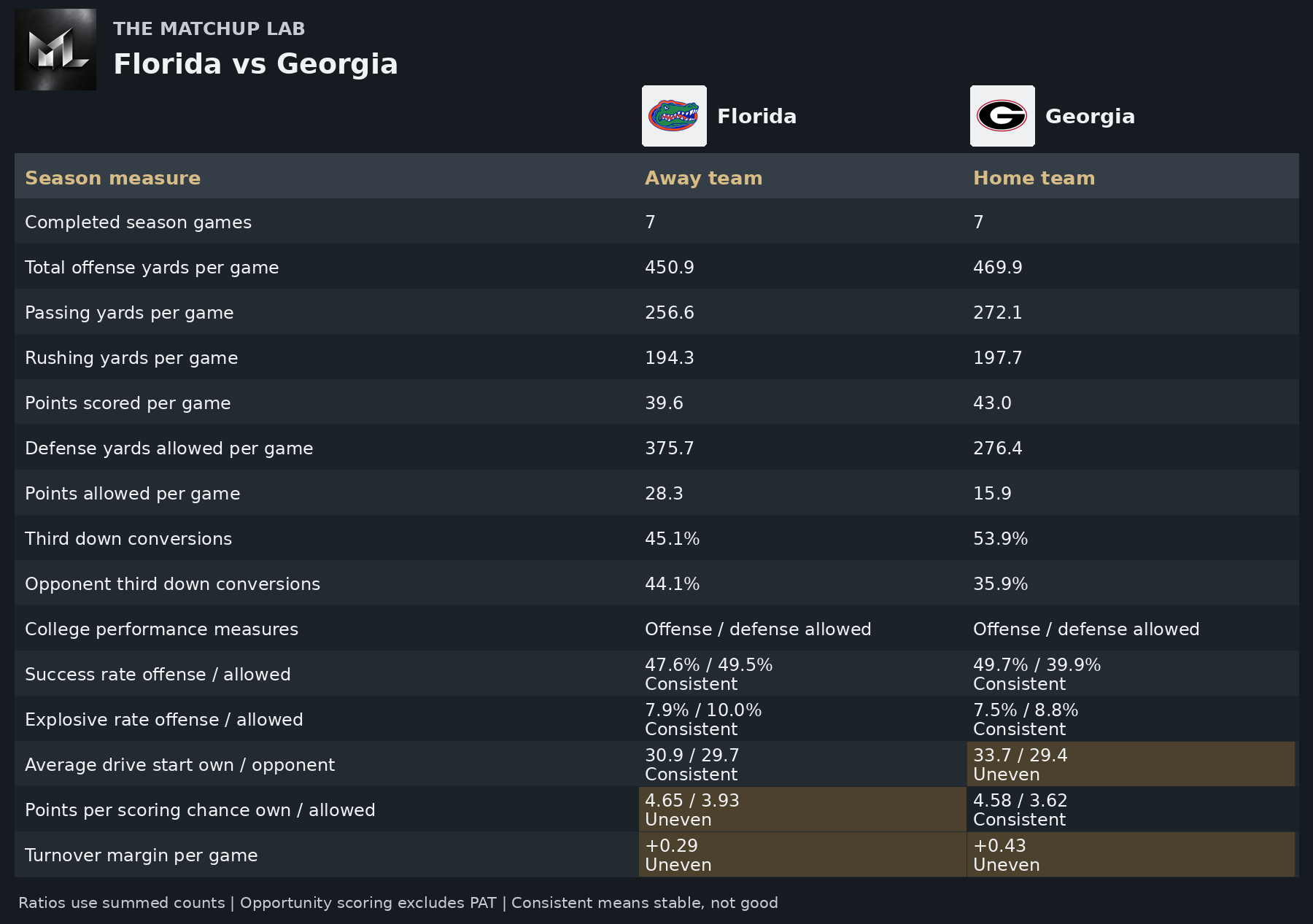
Georgia's season case remains much stronger than the final result of its last game. That is also why the Bulldogs should be dissatisfied with the way they lost it. Georgia gained 440 yards against Auburn and allowed 366, then lost 27-24 after giving the ball away three times without a takeaway. Their offense has been productive through both running and passing, and their defense has regularly limited the opponent's ordinary progress. Florida give them an immediate test of whether those advantages can survive a cleaner possession game.
The Gators' most recent win took a different route. Florida beat Texas 27-24 with 313 yards, no giveaway and one takeaway. That control mattered more than matching the largest offensive totals from earlier in the season. Florida's full defensive record has been much less convincing. Opponents have succeeded on ordinary plays at a higher rate than the Gators have, and the defense has allowed a substantial share of damaging long gains. Georgia have enough offensive balance to keep testing that resistance if they do not end their own possessions with another avoidable loss of the ball.
Florida's running contribution means Georgia cannot treat this as a simple contest between passing totals. The Gators average nearly 194 rushing yards and can keep their best passing opportunities alive by preventing early downs from becoming wasted plays. Georgia's defense needs to make its low season yardage allowance useful through actual drive endings. Florida, meanwhile, must make the Bulldogs work through more uncomfortable downs. Letting a balanced offense choose freely between a productive run and a comfortable pass would be an expensive way to discover whether the defense has improved.
The decisive interaction is Georgia's offensive execution against Florida's need to prevent repeated easy progress, with possession security running through both sides of the game. Georgia need to stop giving away the benefits of a productive afternoon. Florida need a more durable defensive answer than hoping the Bulldogs repeat their three-turnover loss. Both teams come from recent games that demonstrate how a small margin can depend on the use of possessions rather than a headline yardage total. The Bulldogs' 6-1 record is deserved evidence of results. Correcting the Auburn failure would make the next result more secure than merely pointing back to that record.
