
THE MATCHUP LAB · NFL
Centro del partido
Marcadores, estadísticas y la historia del partido.
Buscando actualizaciones…
Sun Nov 22 · Noon Central | Power 27 / 3 | Statistical 26 / 2
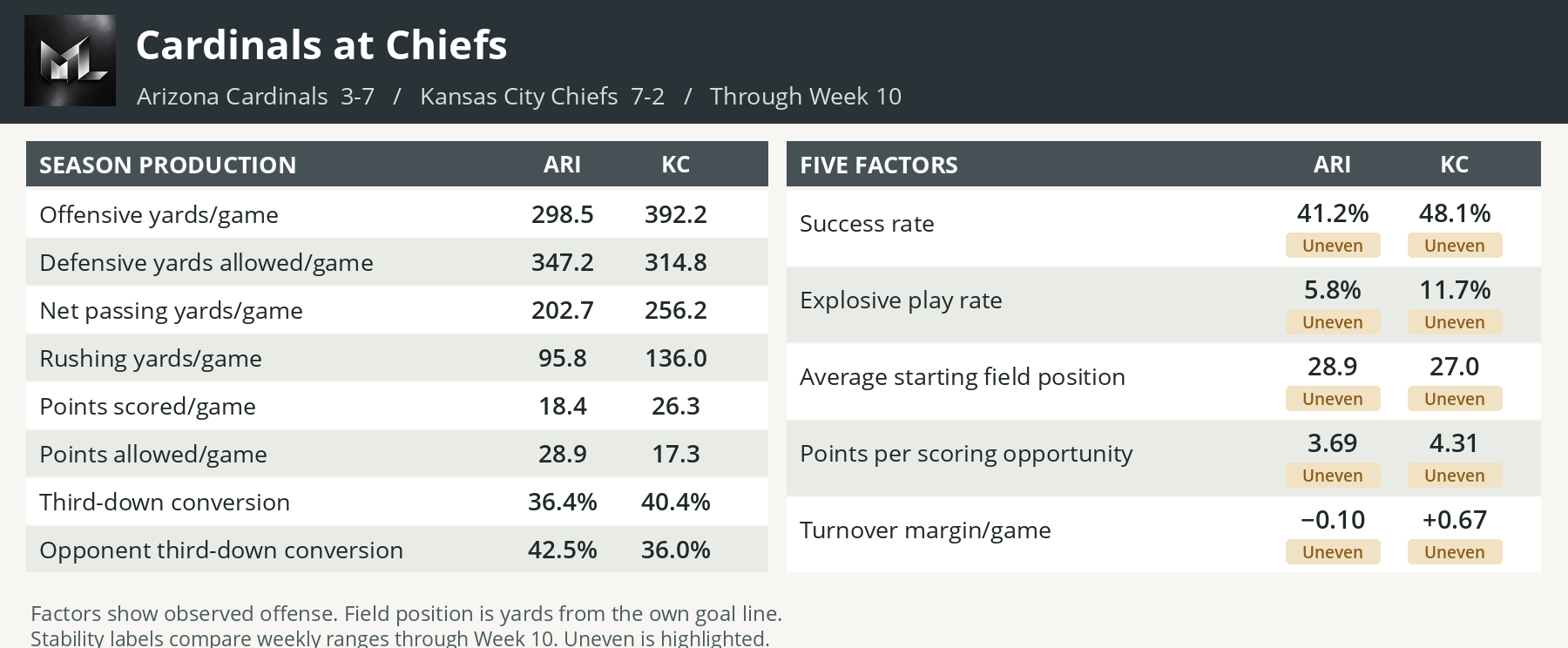
Arizona’s trip to Kansas City brings the week’s second-largest spread and one of its sharpest statistical mismatches. The Chiefs rank second in the five-factor index, supported by a 48.1 percent offensive success rate and a 38.2 percent rate allowed. Arizona sits 26th, with much of its trouble concentrated in explosive plays and finishing. The Cardinals generate an explosive gain on only 5.8 percent of qualifying snaps, while opponents have managed 9.8 percent. Against a defense that makes ordinary gains difficult, the absence of a frequent escape play can turn a promising possession into another punt.
Kansas City has its own way to accelerate the game. Its explosive rate is 11.7 percent, and it gains 392.2 yards per outing. Arizona’s defense has allowed 4.88 points per scoring opportunity, a dangerous fit against an offense averaging 4.31. The Chiefs do not have to score on a long play to make that combination useful. An early explosive gain can move the possession into territory where the Cardinals have struggled to limit damage. Kansas City’s 35–13 win over Atlanta showed what a comfortable scoring margin can look like when its offense gets enough opportunities.
Arizona lost 34–6 to the Rams and needs a more controlled beginning. Its 42.0 percent early-down success rate is a better foundation than its recent score suggests. The Cardinals can aim to string together short gains, keep the third down manageable and make Kansas City defend several decisions. Their near-even turnover margin also offers a way to stay connected to the game if they protect possessions. The larger challenge comes after reaching the opponent’s 40. Arizona averages 3.69 points per opportunity, while Kansas City has allowed just 3.12.
The Chiefs are favored by 15.5 with a total of 40.5. That combination places a heavy burden on Arizona’s offense to contribute enough points to stay close. Kansas City can create separation through ordinary efficiency before asking for anything spectacular. Arizona needs an unusually clean afternoon and a few drives that end in touchdowns rather than short kicks. The useful early signal is whether the Cardinals can force Kansas City to defend a complete possession. Repeated three-and-outs would give the stronger offense too many chances to express its advantage.
Complete NFL Week 10 recap and all 32 team assessments
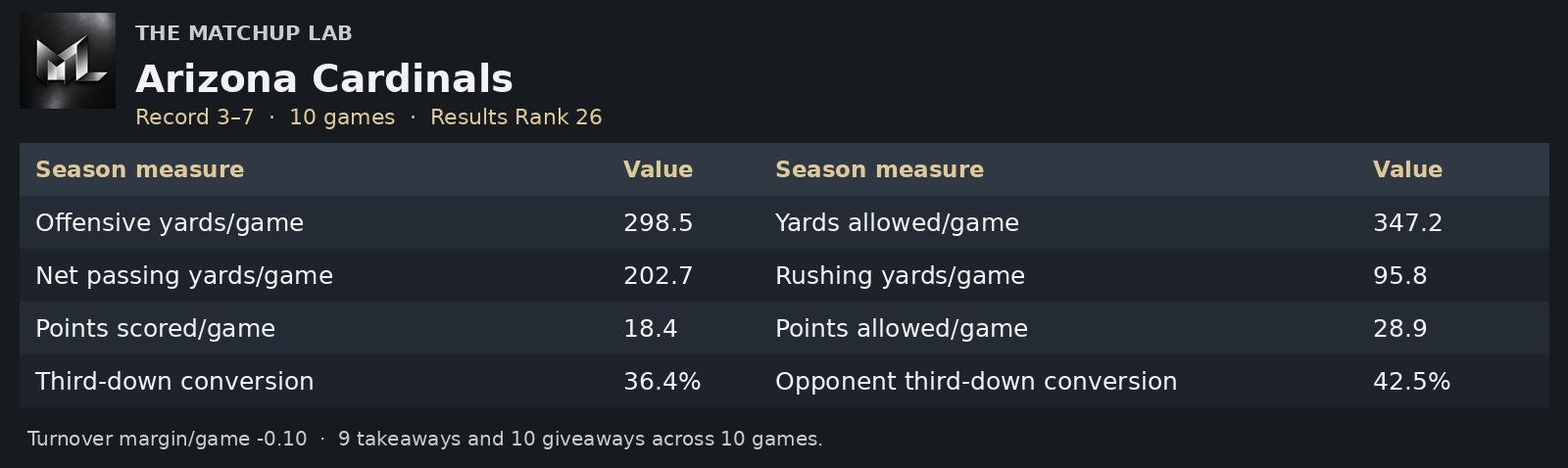
The Cardinals kicked two field goals of the same length and never got closer. Six first downs and no red-zone possessions forced a defense that had given them an early lead right back onto the field. They allow 28.9 points a game. Against Kansas City, merely preventing a deep touchdown is unlikely to be sufficient. Arizona has to possess the ball long enough to give that defense at least a few series with fresh legs.
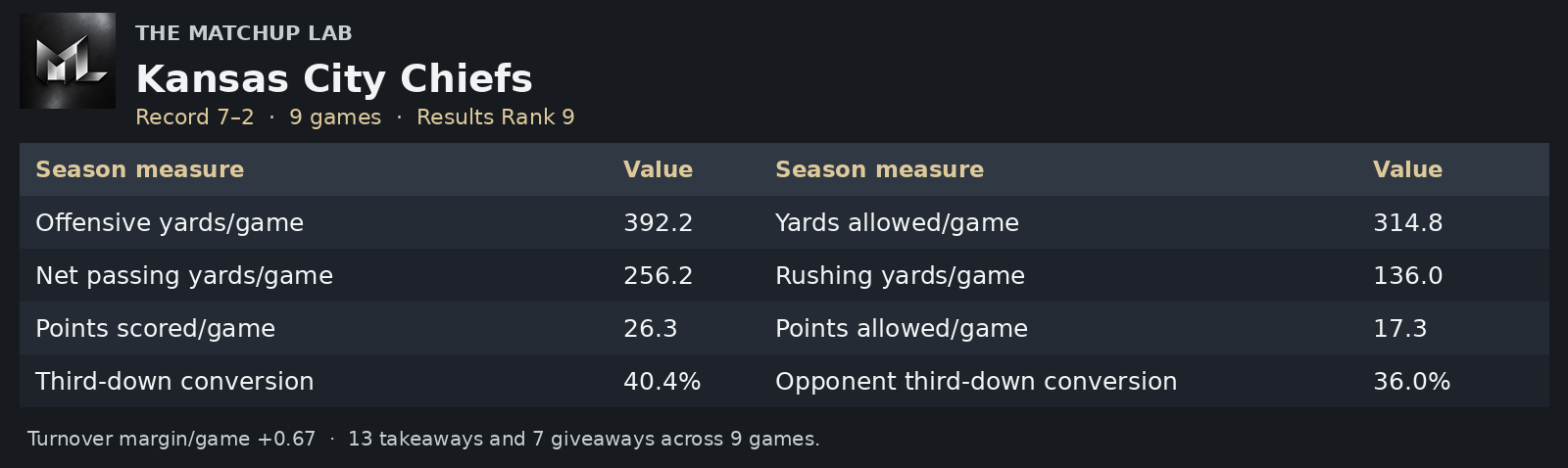
Emmett Johnson ran for 101 yards and caught two touchdown passes. His six-yard scoring catch counted exactly as much as Mahomes’ 43-yard strike to Armstrong. That is a hard choice for a defense facing a team averaging 136 rushing yards. Kansas City still went four for 13 on third down in Atlanta. Arizona has a reason to contest the early downs aggressively. Asking its secondary to defend the whole field on second and short would give Mahomes the choice he just exploited.