
 Short
NFL
JSN’s Sideline Tightrope | The Decisive Play
Published Oct 26, 2026
THE MATCHUP LAB · NFL
Scores, statistics and the story behind the game.
Checking for updates…
THE MATCHUP LAB COVERAGE
Kansas City Chiefs 3, Seattle Seahawks 20 in regulation
Complete NFL Week 7 recap and season assessment
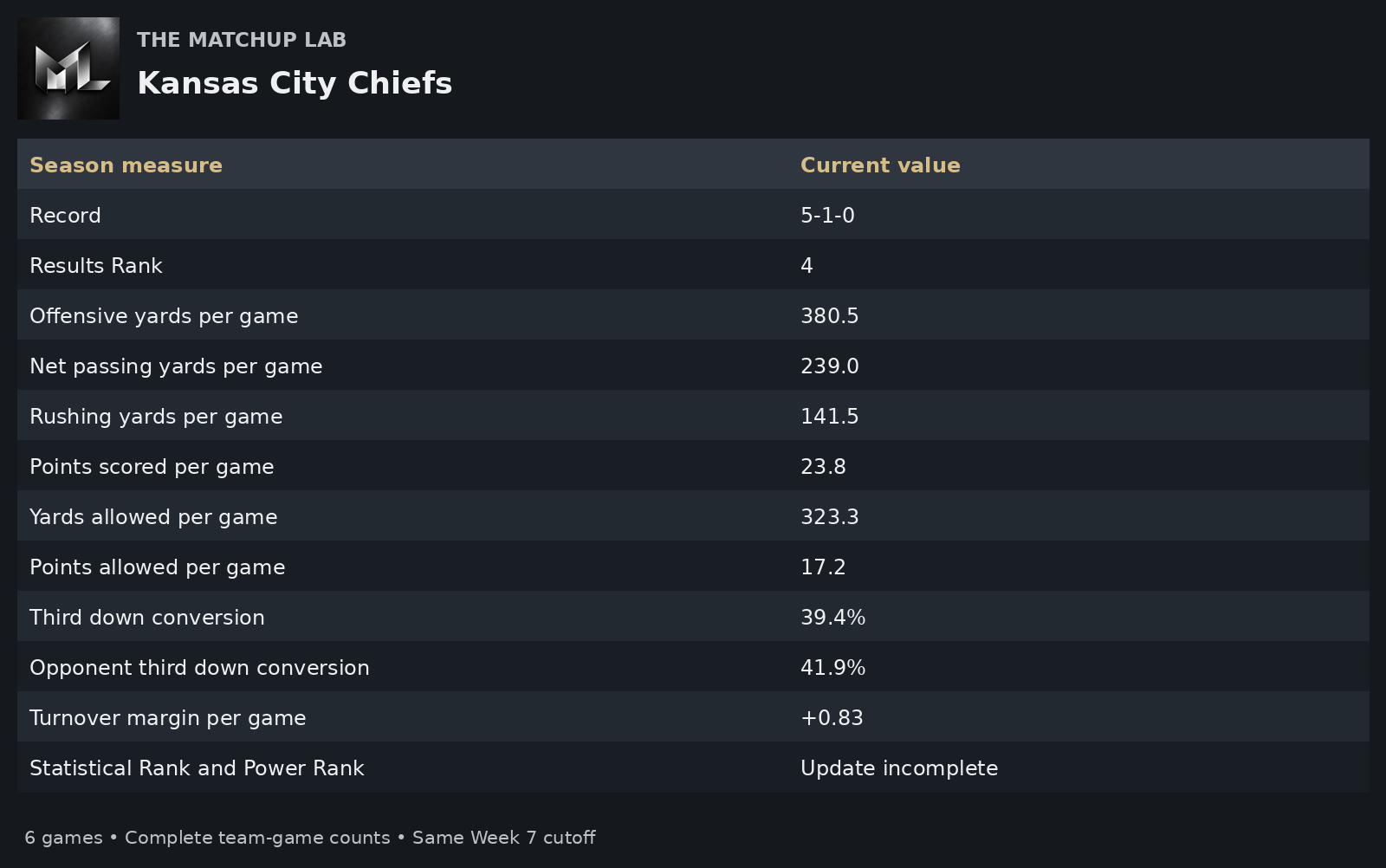
Seattle made Kansas City's first defeat unusually clear. The Chiefs gained 213 yards, rushed for fifty and converted three of eleven third downs. Both teams gave the ball away once, so a turnover imbalance cannot explain the separation. The defense had to face a Seattle offense that extended eleven of sixteen third downs. Kansas City's first five wins remain substantial season evidence. Its response needs to begin with ordinary offensive gains that keep the next snap manageable, while the defense ends possessions before another conversion sends it back to work.
Kansas City's season defense has allowed 17.2 points per game, still a useful foundation after Seattle's win. The offense averages 380.5 yards, substantially more than Sunday's return. That distinction matters when deciding what needs repair. The Chiefs need their ordinary season production to reappear before asking the defense for another exceptionally low scoring target. One failed afternoon should prompt a response without replacing the entire six-game record.
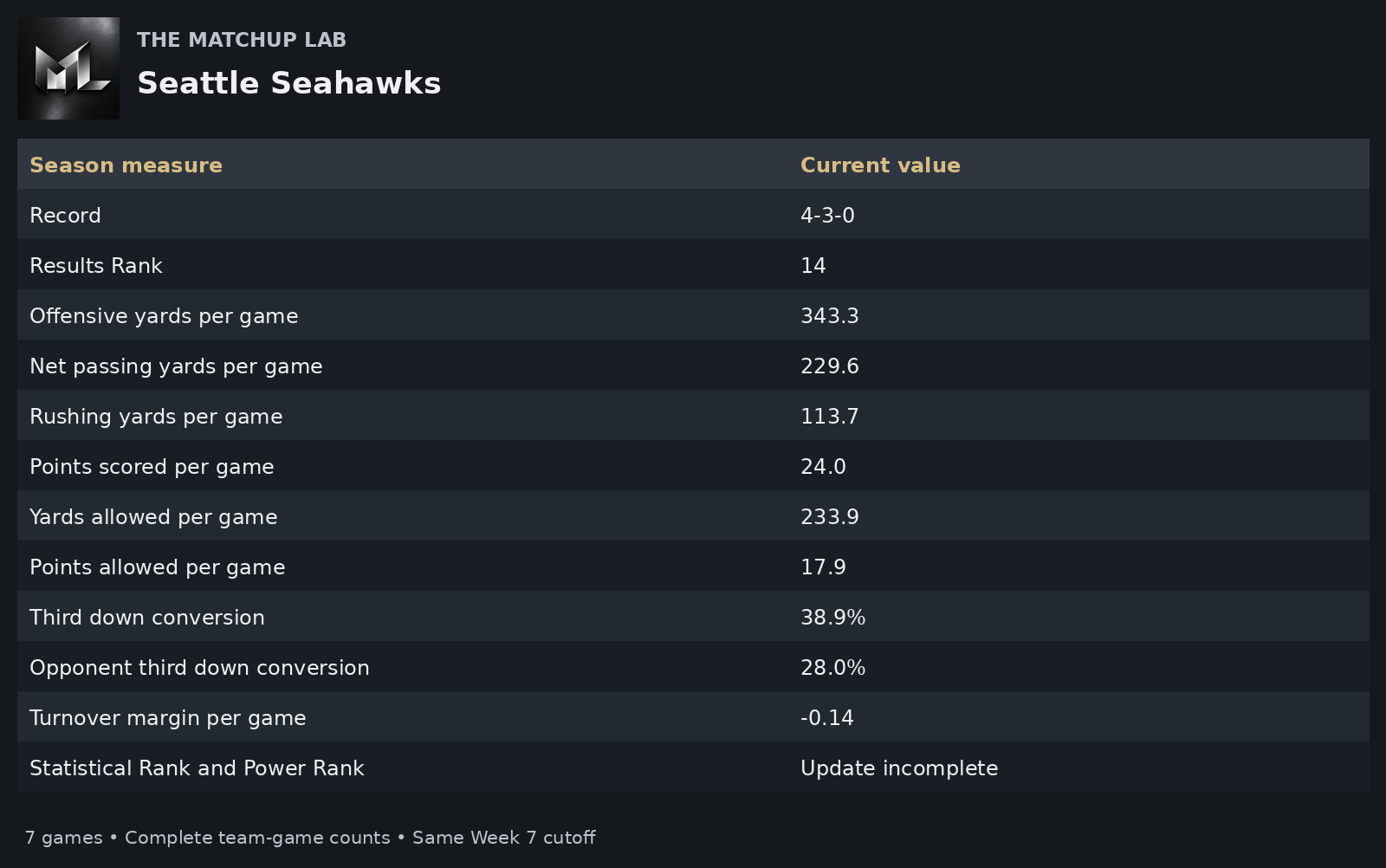
Seattle's defense and offense both supplied convincing work against Kansas City. Holding the Chiefs to 213 yards limited the scoring demand, while eleven third-down conversions in sixteen attempts helped the Seahawks keep possession. Each team committed one turnover, so the seventeen-point margin was not simply a giveaway windfall. The season's positive scoring balance now has another substantial result behind it. Seattle should still seek useful gains before third down rather than treating an exceptional conversion afternoon as the normal plan. The more repeatable aim is making both units' work survive the next series.
Seattle's season defense allows 17.9 points per game against an offense scoring 24.0. That favorable balance gives the latest win a wider foundation. The offense converts 38.9% of third downs, while Sunday's exceptional return went much further. Seattle should retain the ability to sustain a drive without treating eleven conversions in sixteen attempts as a requirement the offense can repeat on command.
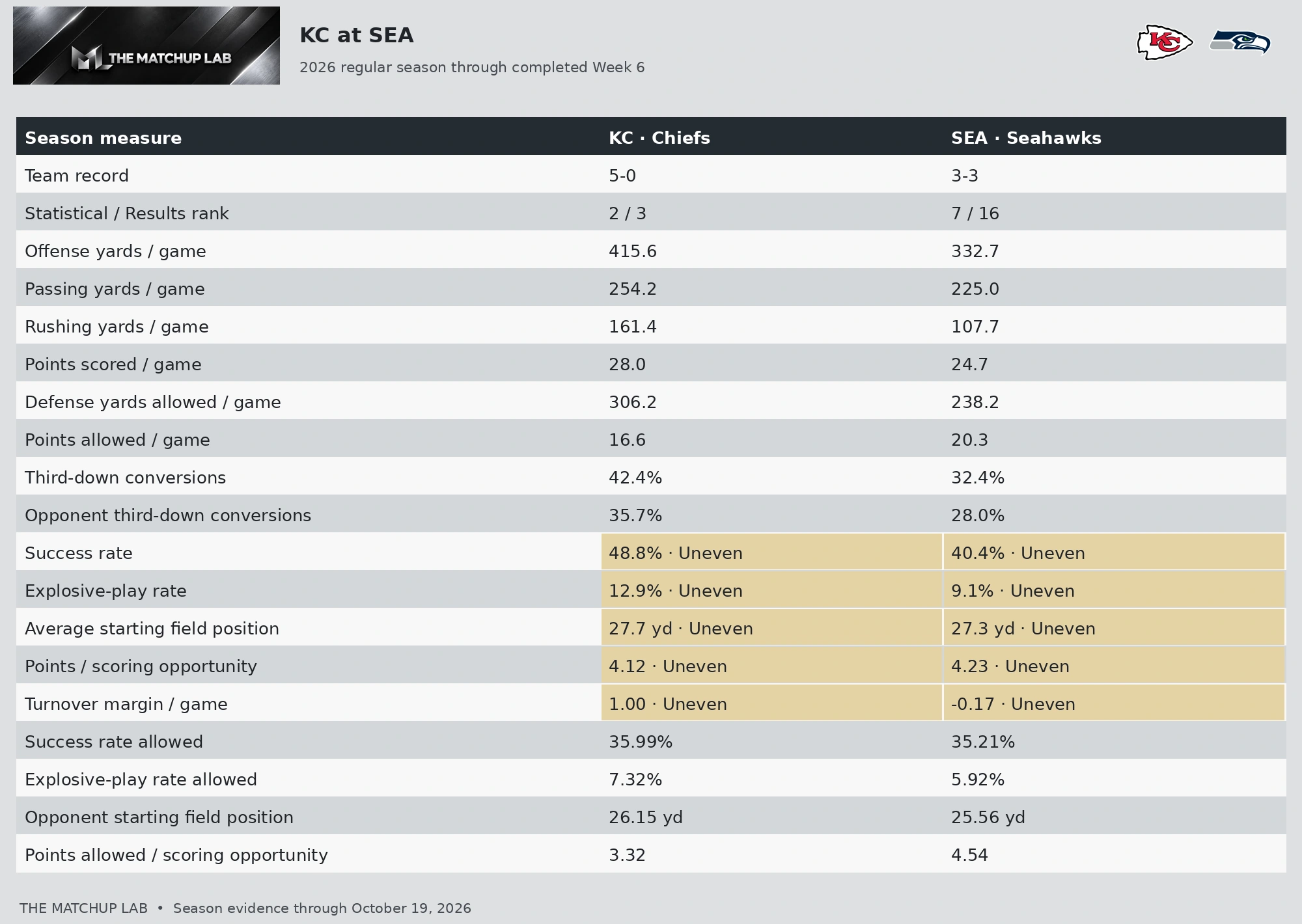
Seattle's defense gives this game a stronger competitive foundation than the records alone suggest. The Seahawks have made ordinary progress difficult and limited long gains, which are precisely the two problems an opponent must solve before Kansas City's offense becomes comfortable. The Chiefs have solved them more often than most teams, creating successful plays on nearly half their qualifying attempts and producing long gains frequently. Seattle needs to keep that first useful play from opening the entire drive. Kansas City needs the next manageable down so its offense can keep asking different questions rather than settling into one obvious answer.
The other side of the matchup carries Seattle's larger burden. Kansas City's defense has prevented ordinary gains at a similarly strong rate, while the Seahawks' offense has been less dependable than the Chiefs'. Seattle has still extracted a useful return from selected scoring chances. It needs to reach those chances often enough for the finishing to matter. Starting positions are close enough that neither team should expect a major automatic territorial advantage. Kansas City's positive turnover margin has supplied additional help; Seattle's has been slightly negative. The Seahawks need to remove that source of separation before asking their defense to win a sequence of narrow possessions.
Kansas City's 22–6 win over the Chargers illustrated how a defense can keep the required offensive score modest. Seattle's overtime defeat at Denver illustrated how a manageable contest can still remain available for the opponent to take. The Seahawks should force the Chiefs to travel, deny the long gain after an early stop and protect the ball when their own possession arrives. Kansas City should make Seattle repeat its useful offensive work across several drives instead of letting one completion define the evening. The decisive contest is Seattle's capacity to sustain a scoring possession against a defense that rarely supplies an easy ordinary down. The Chiefs need their broader offensive reliability to remain visible. Seattle needs enough productive offense to turn its defensive resistance into an actual lead.