
 Short
What in the Hog?!
Jonathan Taylor Missed the Meeting | What the Hog
Publicado 27 oct 2026
THE MATCHUP LAB · NFL
Marcadores, estadísticas y la historia del partido.
Buscando actualizaciones…
COBERTURA DE THE MATCHUP LAB
Indianapolis Colts 10, Minnesota Vikings 16 in regulation
Complete NFL Week 7 recap and season assessment
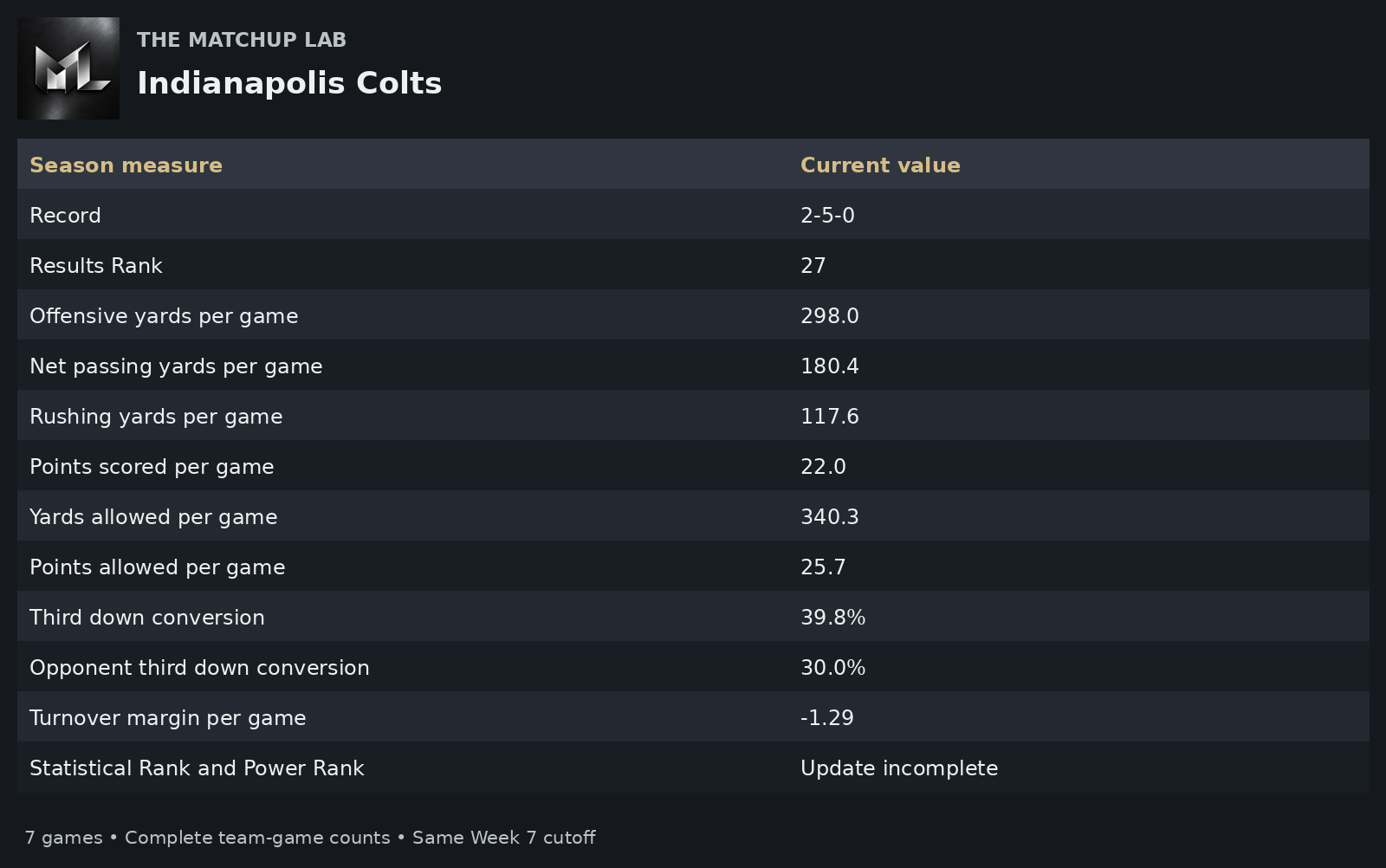
Indianapolis led at halftime and then scored nothing in Minnesota. The Colts rushed for 154 yards and converted eight of fifteen third downs, but their total offense reached only 218 yards. Useful ground work could not supply enough passing progress or enough points. The one giveaway increased the cost of an already limited number of chances. The season's losing record reflects an offense that has not consistently covered its defensive burden. Indianapolis needs its early rushing success to support a complete drive, rather than treating the first ten points as a sufficient afternoon's work.
Indianapolis scores 22.0 points per game and concedes 25.7. The offense averages 298.0 yards, so its useful rushing stretches have not yet established a complete scoring attack. Keeping the ball secure helps preserve the chances that do exist. The next improvement is making early ground gains support passing progress and a finished drive, rather than leaving another promising start stranded before the game is settled.
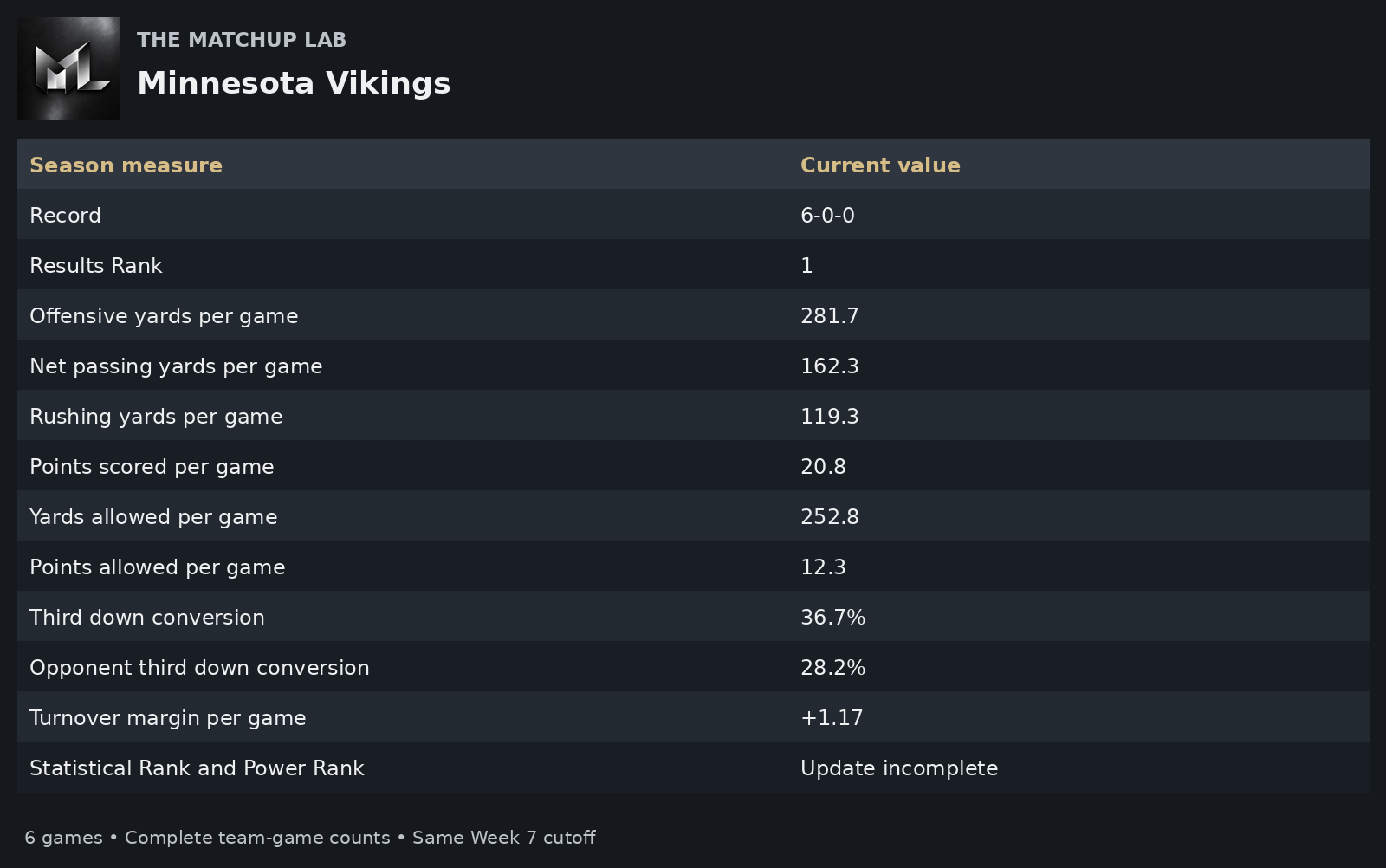
Minnesota is the league's remaining unbeaten team because its defense keeps the required winning score modest. Indianapolis managed 218 yards and no second-half points. That restraint mattered when the Vikings converted only three of eleven third downs. Winning without a giveaway helped, but sixteen points still left the game available late. The offense needs more early progress so a defensive stop can become a longer possession and a wider margin. A 6-0 record earns its position without requiring anyone to pretend every part of the team is equally convincing.
The season defense allows just 12.3 points per game and stops opponents on most third downs, with only 28.2% converted. That gives Minnesota a workable score even when its offense is modest. Its own 36.7% conversion rate leaves room for longer drives that keep the defense's task manageable. The useful balance is a defense that controls the demand and an offense that does more to reduce how often that defense must answer.
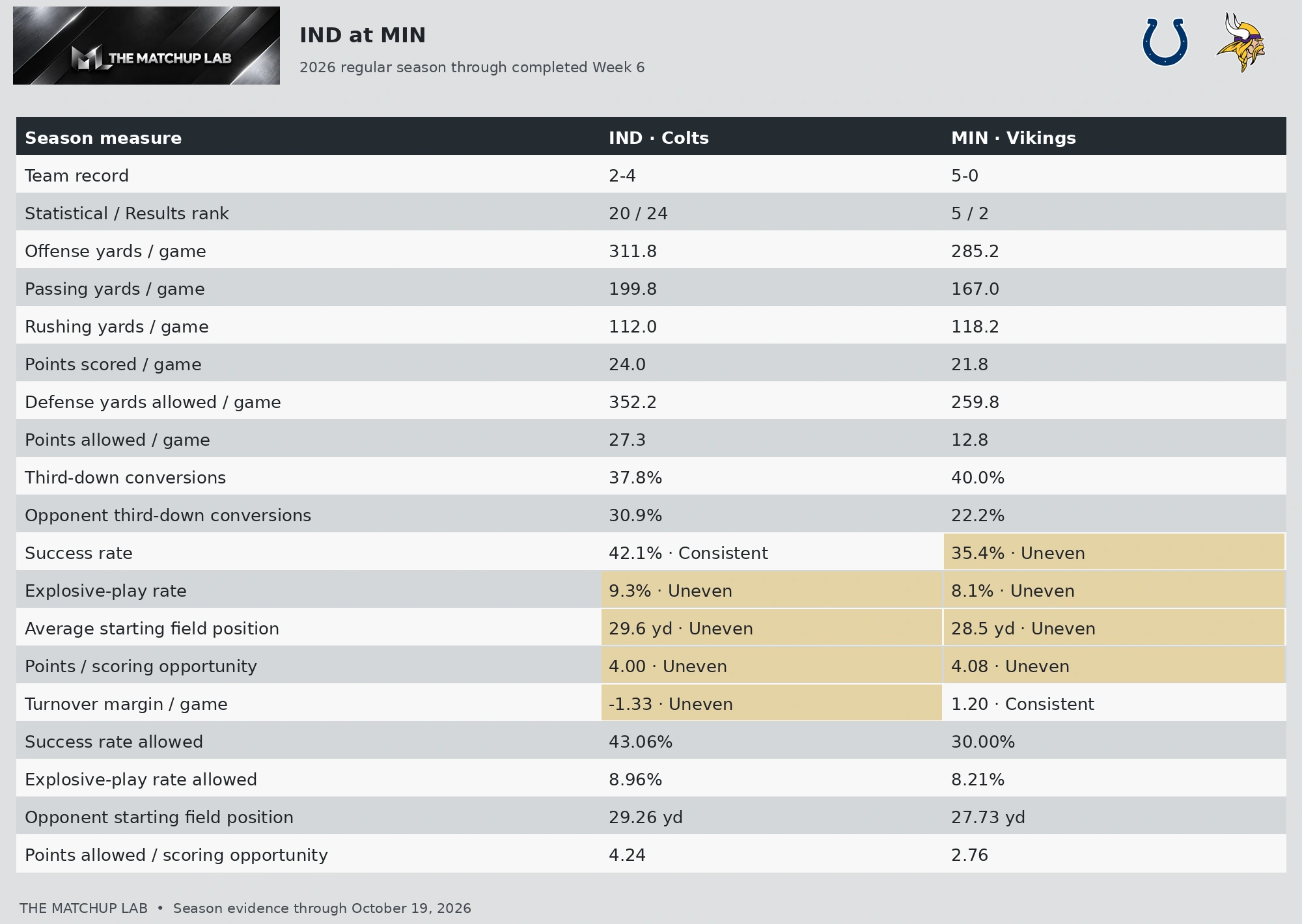
Minnesota's unbeaten start has been built around making offense difficult for the other team. Opponents have made successful ordinary gains on only 30% of qualifying plays. Indianapolis arrives with a narrower offensive margin and a serious possession problem. The Colts have given away 1.33 more possessions per game than they have taken back. An offense facing this defense cannot treat an early-down loss and the next giveaway as separate inconveniences. Together they remove both the useful down and the chance to repair it. Indianapolis needs a series that stays alive before it can ask whether a larger play is available.
The Vikings' offense has not needed to be the league's most productive on every snap because its defense and turnover returns have reduced the scoring burden. That assistance is real, but it can fluctuate. Minnesota needs to create useful possessions even if Indianapolis does not donate another one. The Colts' defense has allowed ordinary gains more frequently than its own offense produces them. That offers Minnesota a route to steady progress without requiring an aggressive search for a long gain. Neither team's non-turnover starting position implies a large automatic territorial advantage, so the decisive possessions should still be built through execution rather than assumed short fields.
Indianapolis' loss after leading Tennessee 13–0 is a warning about allowing an early advantage to become the entire offensive plan. The Colts need productive drives after their first successful series and fewer empty trips that put a recovering opponent back into the game. Minnesota's defense has also held opponents to a low return from scoring opportunities, making a wasted chance particularly expensive. The decisive test is Indianapolis' ball security against a defense that has helped Minnesota win possession exchanges. The Colts can make this a different game by avoiding the damaging mistake and converting the opportunities that remain. The Vikings need to preserve their defensive discipline and show that their offense can lengthen an advantage without waiting for another takeaway.