
 Short
What in the Hog?!
Rodgers paid for the big man's delivery | What in the Hog?!
Published Oct 23, 2026
THE MATCHUP LAB · NFL
Scores, statistics and the story behind the game.
Checking for updates…
THE MATCHUP LAB COVERAGE
Read the complete NFL Week 6 preview
Sun Oct 18 · Noon Central
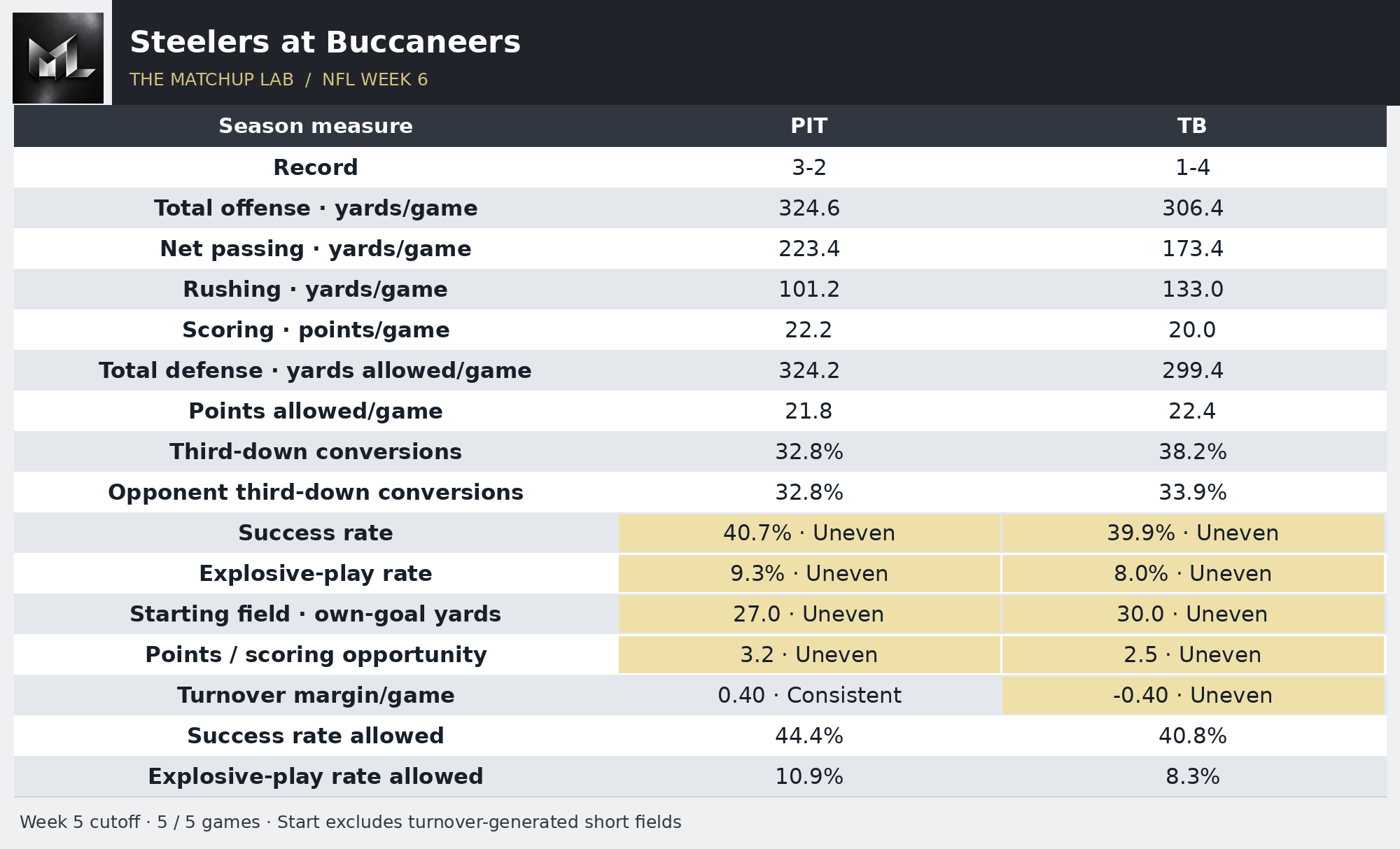
Pittsburgh is 3–2 and Tampa Bay 1–4, but their underlying season performances are much closer than those records suggest. They sit next to each other in our performance index, with Tampa Bay narrowly ahead on unrounded score. The Buccaneers allow 299.4 yards per game against Pittsburgh's 324.2, while the Steelers score 22.2 points per game against Tampa Bay's 20.0. Neither team has produced a profile that justifies expecting an opponent to disappear after one setback.
Tampa Bay's biggest offensive cost is what happens after it reaches useful territory. Its scoring opportunities have returned 2.5 points, compared with Pittsburgh's 3.2. The Buccaneers' 39.9 percent success rate and 8.0 percent explosive rate also limit how often they can manufacture another chance after wasting one. They need to carry a successful first-down gain into a manageable second down and protect the possession long enough to reach a genuine touchdown opportunity.
Pittsburgh has not built an overwhelming offense either. It succeeds on 40.7 percent of qualifying plays and has allowed opponents a 44.4 percent success rate. Tampa Bay can stay involved if it takes the shorter gains rather than treating every drive as an emergency. Conversely, Pittsburgh must prevent Tampa Bay from turning one useful completion into a sequence of easy first downs. The Steelers have allowed explosive gains on 10.9 percent of qualifying snaps, enough to punish a defense that loses patience or tackles poorly after several acceptable plays.
The decisive matchup is finishing in a game where neither offense has earned the right to waste territory. Pittsburgh needs its longer gains to become completed scoring drives, not an excuse to ignore ordinary-down inefficiency. Tampa Bay needs to turn a sounder defensive yardage profile into more possessions that end with touchdowns at the other end. The records establish what has happened. They do not erase how little separates these teams in the performance observed so far.
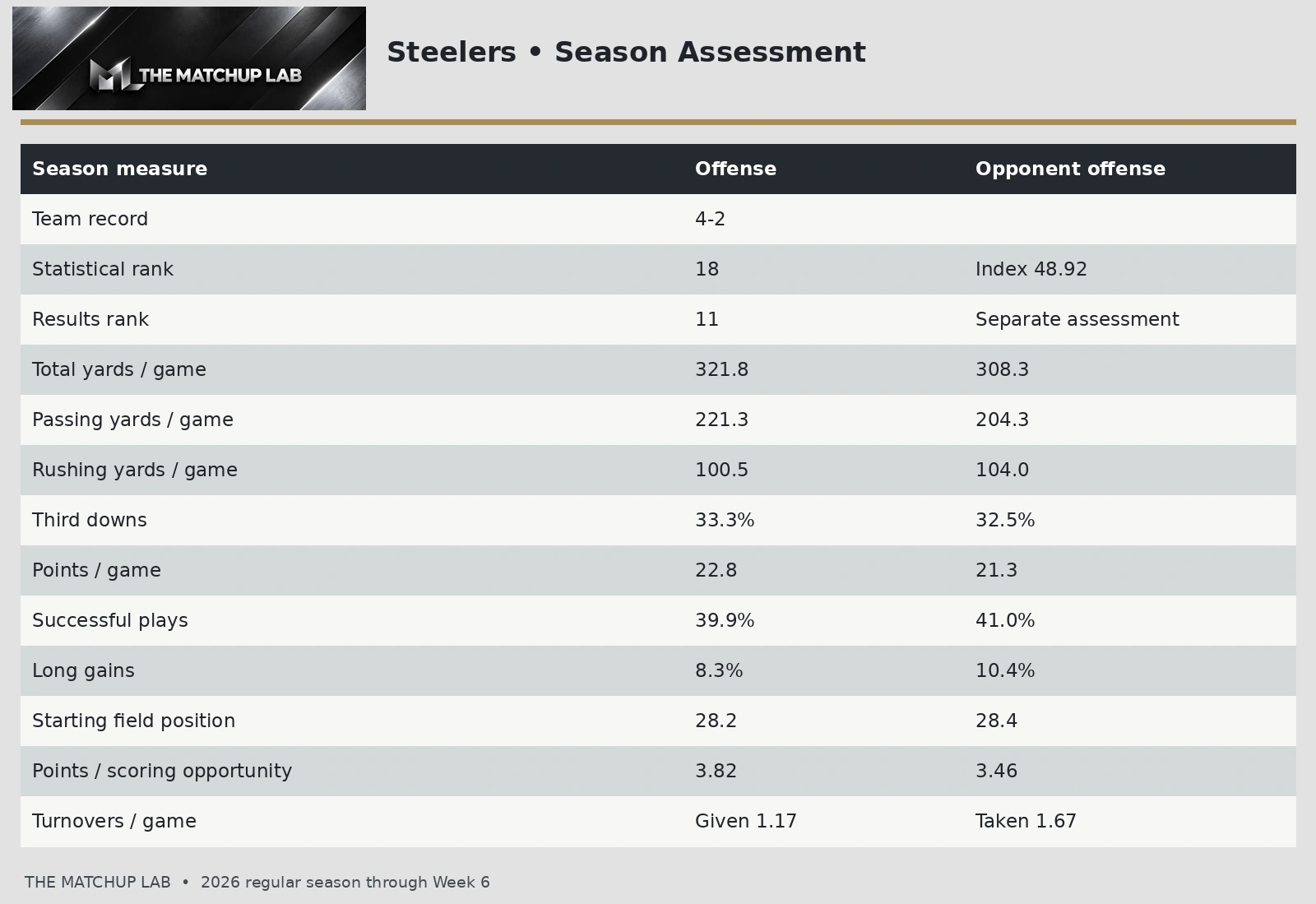
Pittsburgh escaped Tampa Bay 26–19 in overtime, but the full-season assessment should not shrink to the winning finish. The Steelers' ordinary-play and long-gain comparisons are both slightly unfavorable. Positive turnover assistance and a better return from threatening drives have helped make the results healthier than those comparisons alone suggest. That is real execution, and the 4–2 record deserves recognition. It also leaves a narrow route to the next victory if the opponent protects possession. Eleventh in Results Rank and eighteenth statistically capture the distinction. Against New Orleans, Pittsburgh needs to establish productive drives before a deficit makes the offense urgent. Recovery is useful; repeatedly requiring it is a more expensive habit.
Next game is PIT at NO, Sunday, October 25th, 8:30 AM Central.
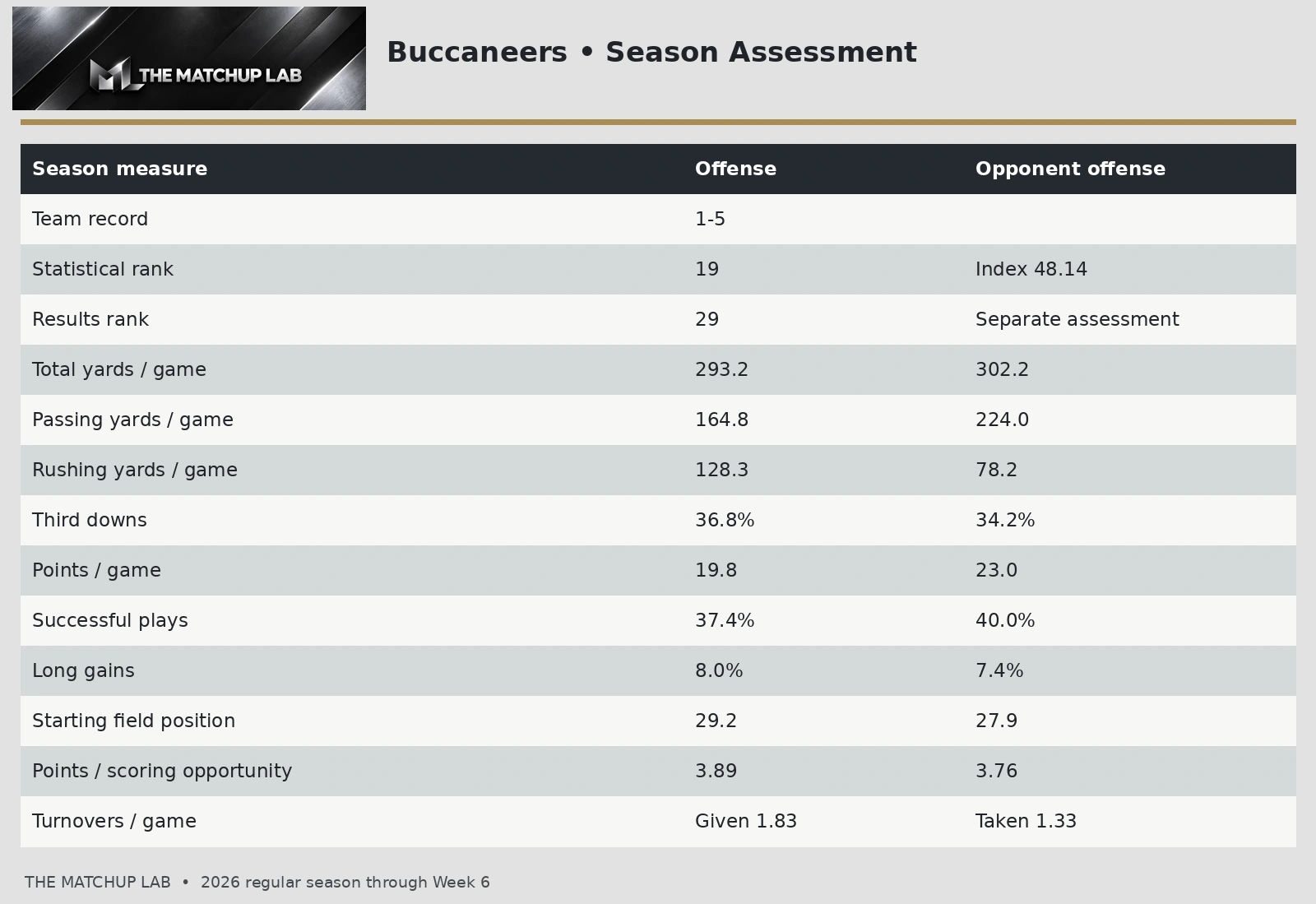
Tampa Bay had a game it could protect and still lost 26–19 in overtime to Pittsburgh. A 1–5 record now includes another defeat in which the defense's earlier work failed to become a completed result. The season's offensive scoring rate leaves little room to waste a lead. Ordinary offensive progress has been less reliable than what opponents have managed, and the negative turnover margin adds another cost. Nineteenth statistically is better than twenty-ninth in results, but that difference is an explanation to test rather than reassurance to accept. The Buccaneers need possessions that extend a lead and defensive stops that close it. Carolina will make an attack that stalls repeatedly travel a difficult road back onto the field.
Next game is TB at CAR, Sunday, October 25th, 12:00 PM Central.