
THE MATCHUP LAB · NFL
Game Center
Scores, statistics and the story behind the game.
Checking for updates…
Read the complete NFL Week 6 preview
Sun Oct 18 · Noon Central
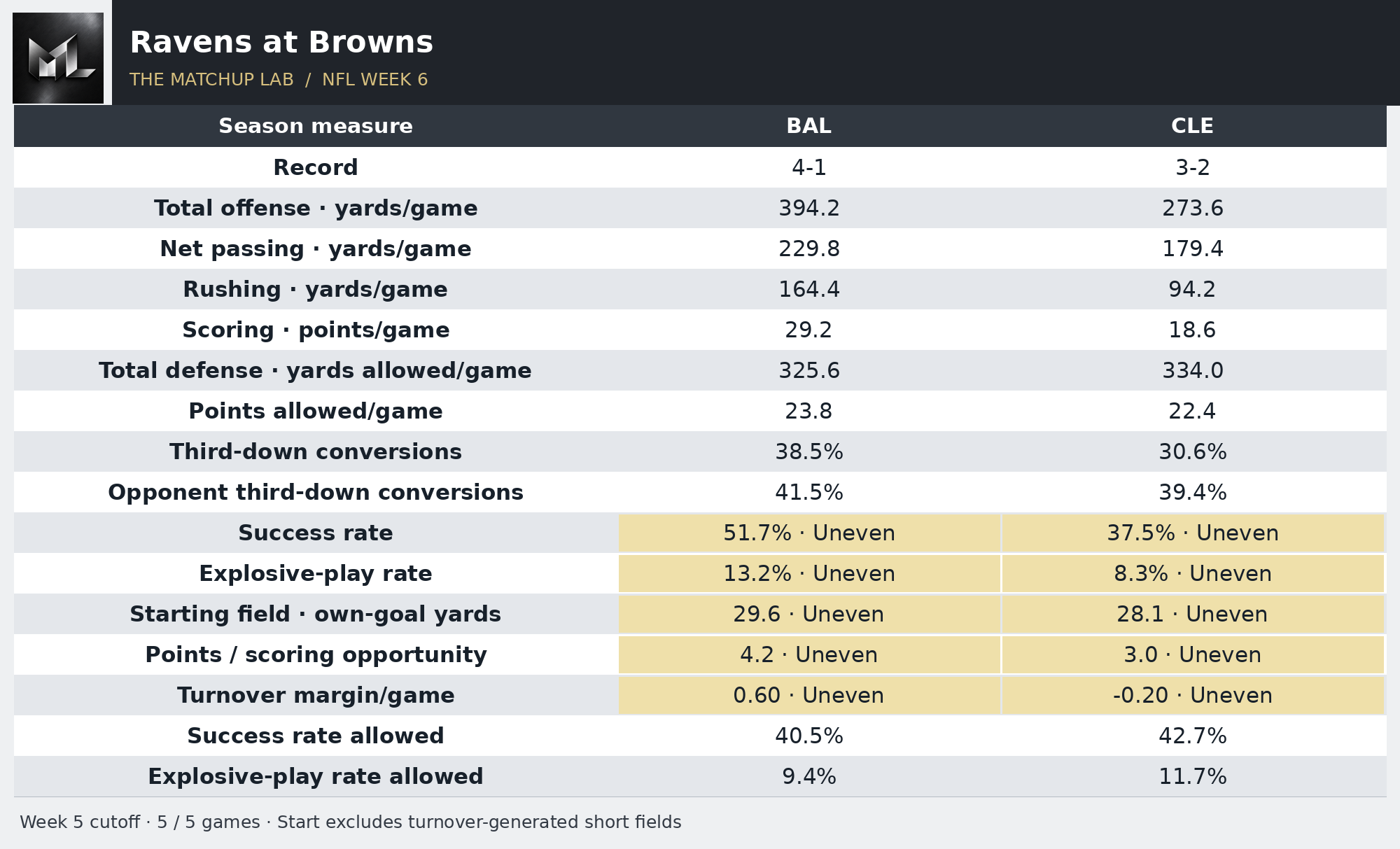
Cleveland's 3–2 record is considerably healthier than its offensive profile. The Browns average 273.6 yards and 18.6 points per game, with a 37.5 percent success rate. Baltimore averages 394.2 yards and 29.2 points while succeeding on 51.7 percent of qualifying plays. Cleveland cannot close that gap merely by keeping the first quarter quiet. It needs to establish an offense that can remain on the field after the Ravens have completed their own sustained possession.
Baltimore's advantage is not confined to occasional long gains. Its success rate gives the offense several ways to move the chains, and its 13.2 percent explosive rate means a defense cannot solve the problem just by surviving the first down. Cleveland has allowed explosive gains on 11.7 percent of qualifying snaps. If the Browns crowd the shorter passing windows or commit heavily to stopping a run, the cost of a missed assignment can be an entire drive's worth of territory.
The Ravens still have work to do defensively. Their 4–1 record does not erase 23.8 points allowed per game, and opponents have generated explosive gains on 9.4 percent of qualifying plays. Cleveland's best route is to create a manageable second down, make Baltimore tackle through an extended drive and avoid asking a struggling offense to win through repeated desperation throws. A field-position advantage would help, but it cannot replace dependable gains once possession begins.
Finishing gives Baltimore another separation. The Ravens average 4.2 points per scoring opportunity against Cleveland's 3.0. Cleveland must force Baltimore to settle, not simply celebrate a stop several yards short of the end zone before allowing a later touchdown. The decisive contest is whether the Browns can interrupt Baltimore before its offense builds momentum, then provide enough production of their own to keep that defensive work relevant. A winning record is not evidence that Cleveland can afford another day of short, unproductive possessions.
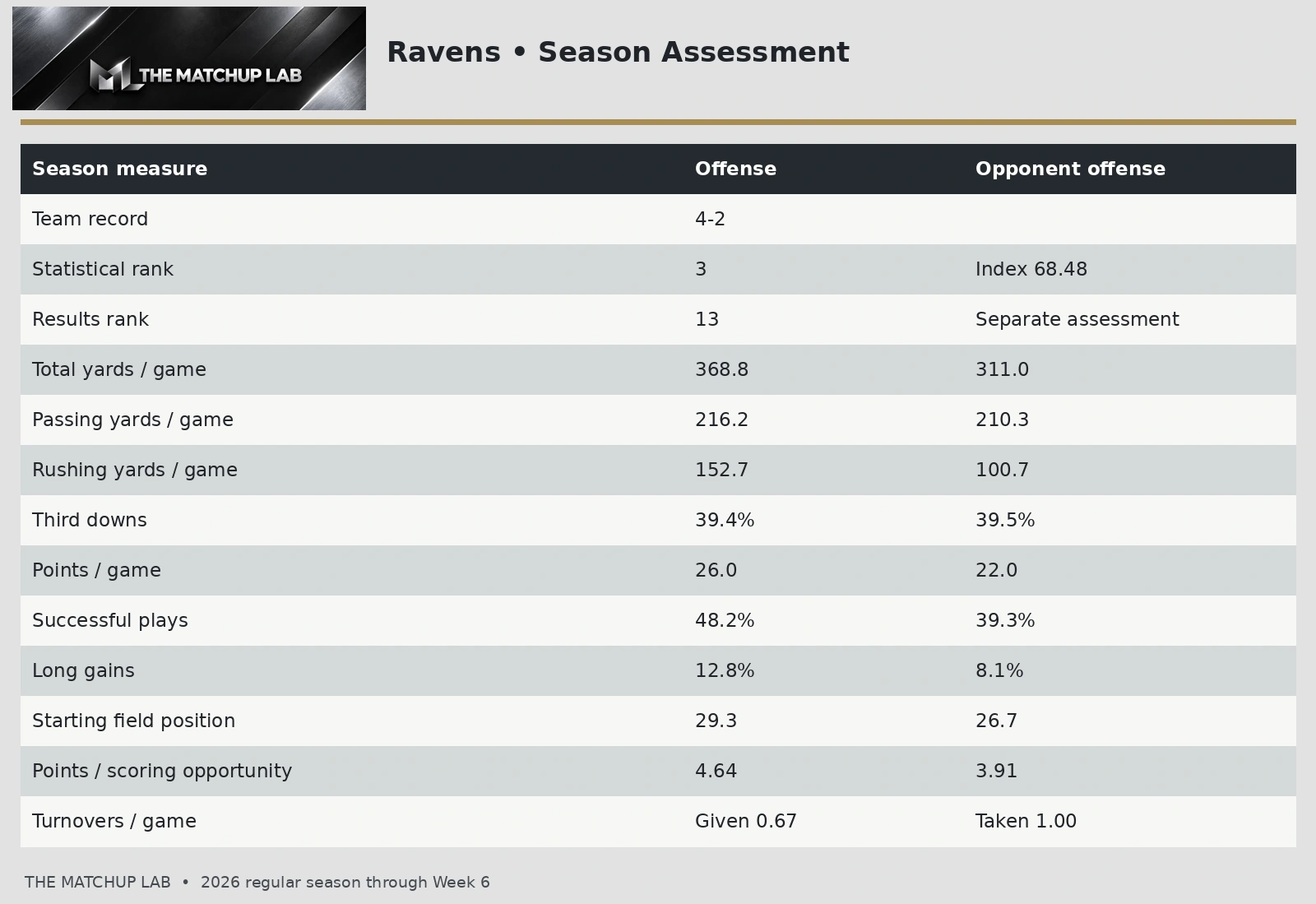
Baltimore's third statistical position makes the Cleveland loss more revealing, not less. A team can have a strong season profile and still squander a winnable afternoon. The Ravens scored ten points, and the offense's usual ability to gain useful ground did not produce enough finishing opportunities or points. Across the season, Baltimore remains better than its opponents at both ordinary progress and long gains. Those advantages should create room for recovery, but they do not erase a completed defeat. Thirteenth in Results Rank reflects what has actually been banked. Against Cincinnati, the task is to turn possession quality into a lead the defense can protect rather than asking the rankings to explain another low-scoring loss.
Next game is CIN at BAL, Sunday, October 25th, 12:00 PM Central.
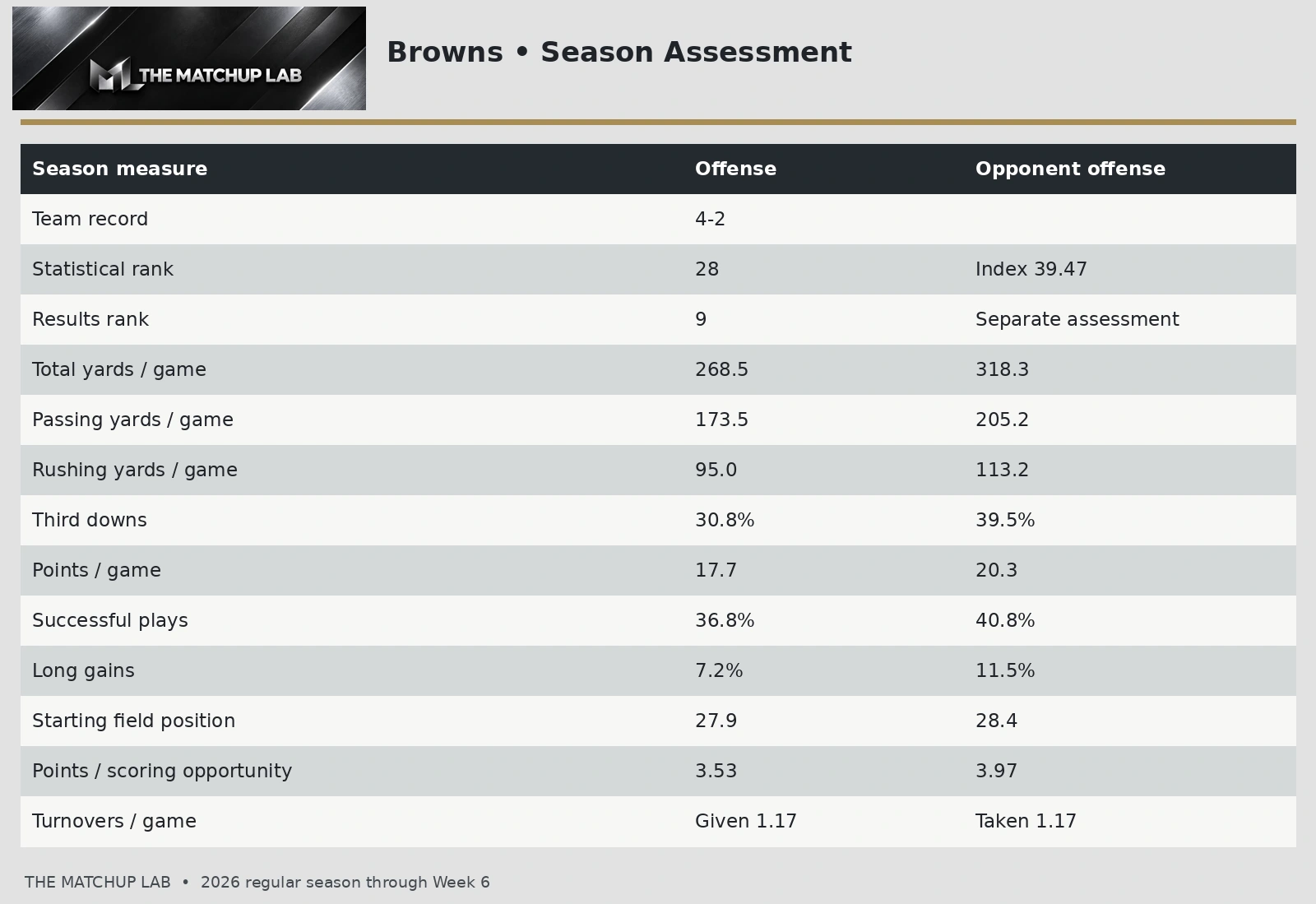
Cleveland's 13–10 win over Baltimore deserves credit because the defense prevented further scoring after conceding ten early points. The 4–2 record is a real achievement. It is also attached to an offense averaging only 17.7 points, with ordinary gains and long plays both less frequent than those of its opponents. Ninth in Results Rank captures the wins. Twenty-eighth statistically captures how little operating room the offense has created. The next improvement has to give the defense more assistance, making productive possessions a regular part of the game rather than asking the next opponent to stay below fourteen. Tennessee supplies the next test. Another modest scoring day could still win, but relying on it leaves Cleveland little protection against a defensive concession.
Next game is CLE at TEN, Sunday, October 25th, 12:00 PM Central.